
→
01 · Observe
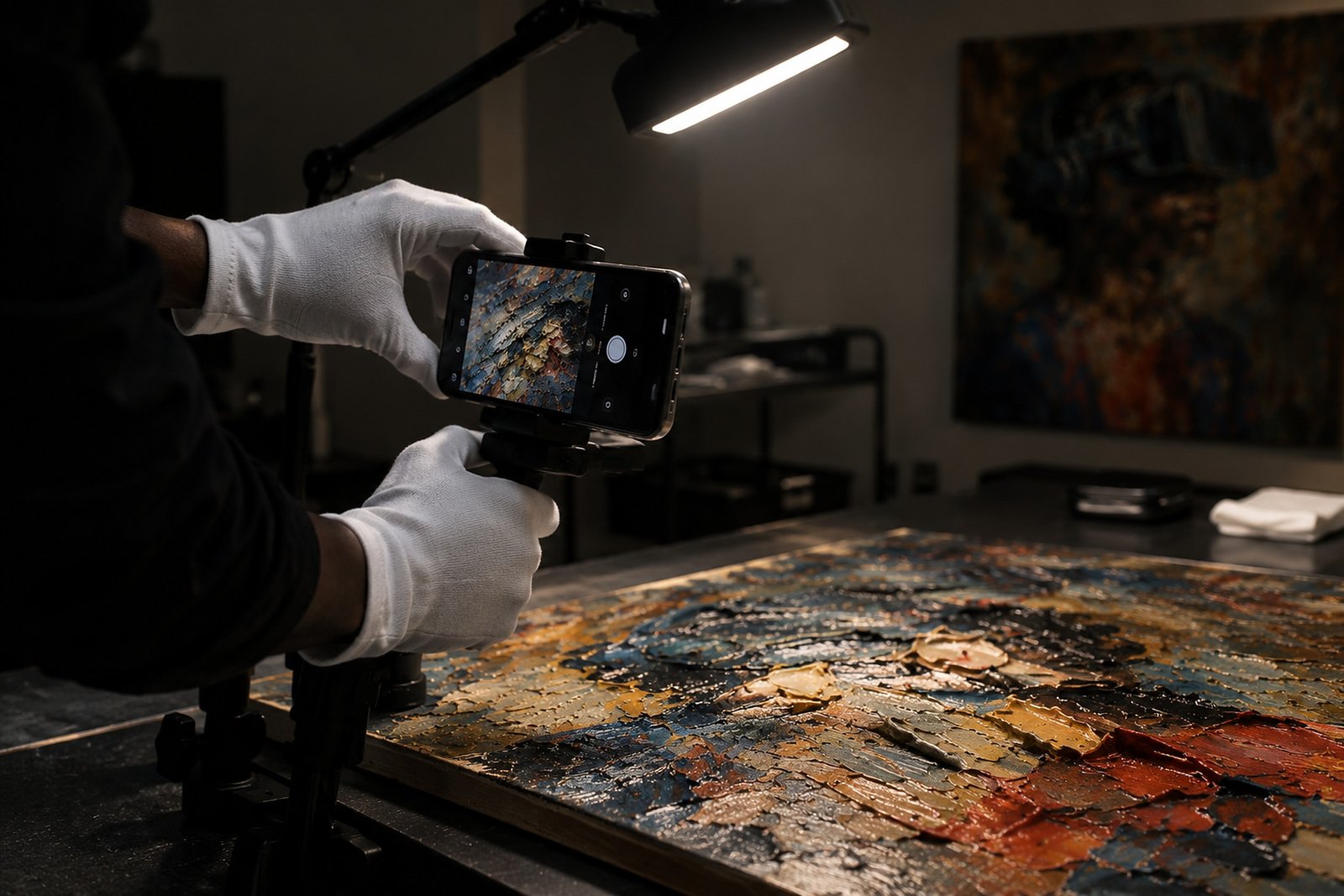
A phone on a stand, a polarising filter, and a single lamp carried to six marked positions. Nothing in frame but the work. No wall, no neighbouring piece, no equipment.
A physical record for every work of art
ARcv is developing a digital documentation and provenance platform to help artists, collectors, galleries and cultural institutions document, manage and preserve information about artworks.
Why surface
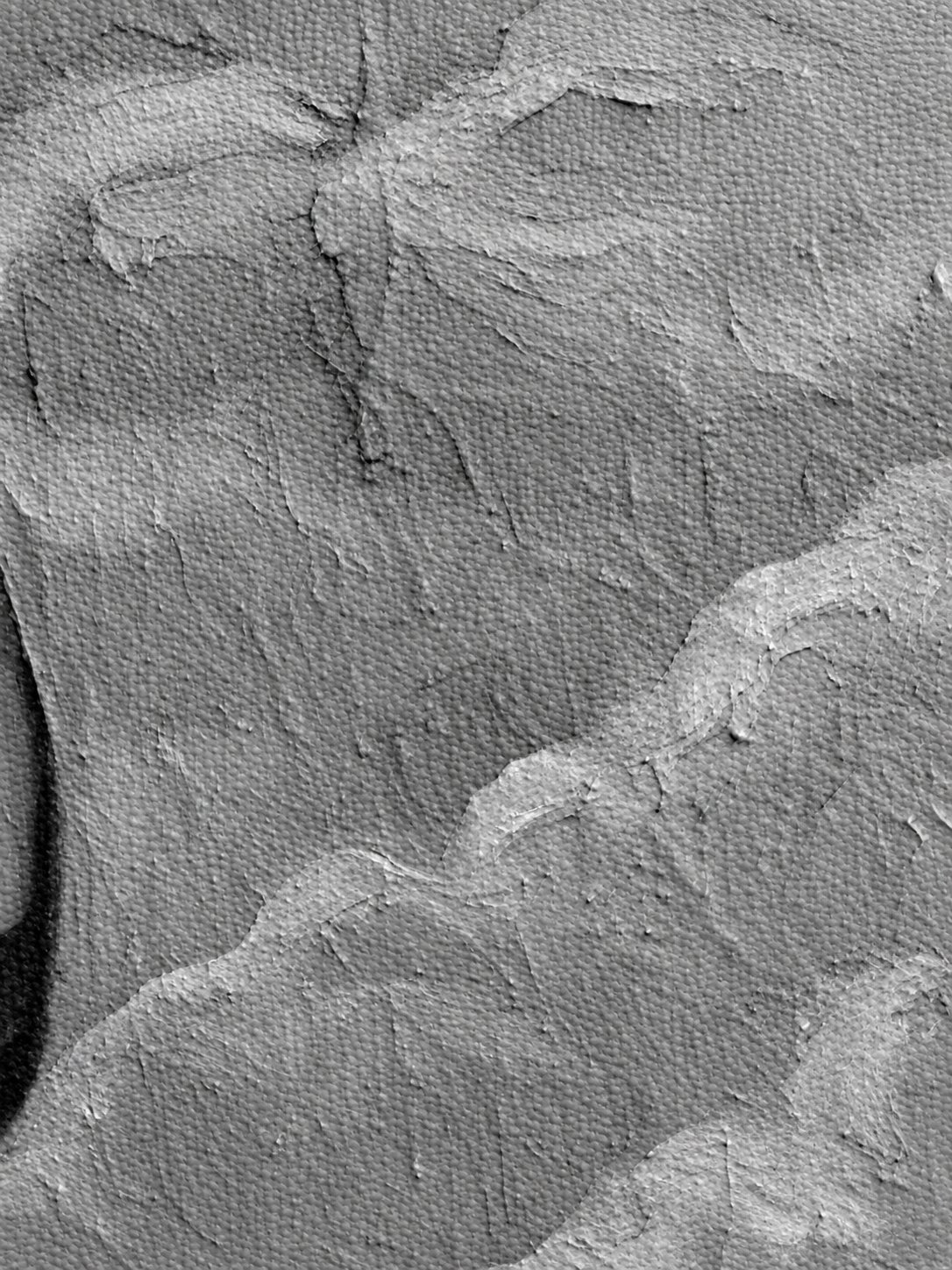
A painting is not flat. Oil paint dries in ridges a few hundred microns high. Canvas weave prints through the thin passages. Varnish keeps a history of every knock the panel has taken. A photograph loses all of it.
Two photographs of the same painting, a year apart, can look identical and tell a registrar nothing. The paint itself is harder to copy, and it is the part that belongs to one object rather than to its picture.
We are exploring how photogrammetry, 3D documentation and structured records can bring more precision to the way artworks are identified, measured and documented, and whether that makes a more reliable foundation for collection management, conservation and long‑term stewardship.
How a capture works
A phone on a stand, a polarising filter, and a single lamp carried to six marked positions. Nothing in frame but the work. No wall, no neighbouring piece, no equipment.
The sequence resolves into surface normals and a height field. Scale comes off a target in the first frame; colour off a checker in the same light as the work.
Numbers are stored separately from anything anyone asserts about them, with the capture conditions attached: which phone, which lamp positions, whether the rig was moved.
Where this stands
Everything below comes from our own captures of a single painting. We publish the limits with the numbers because a measurement without its conditions is not worth much to a conservator.
METHOD
Cross‑polarised photometric stereo on a phone, for flat work.
One pair, captured eleven minutes apart with the rig dismantled and rebuilt in between, agreed on scale.
The same frames produce bit‑identical numbers, so the spread is the rig and not the code.
Target year.
No detection threshold. A second capture can report that something changed; it cannot say whether that is damage, ageing or restoration.
The artwork
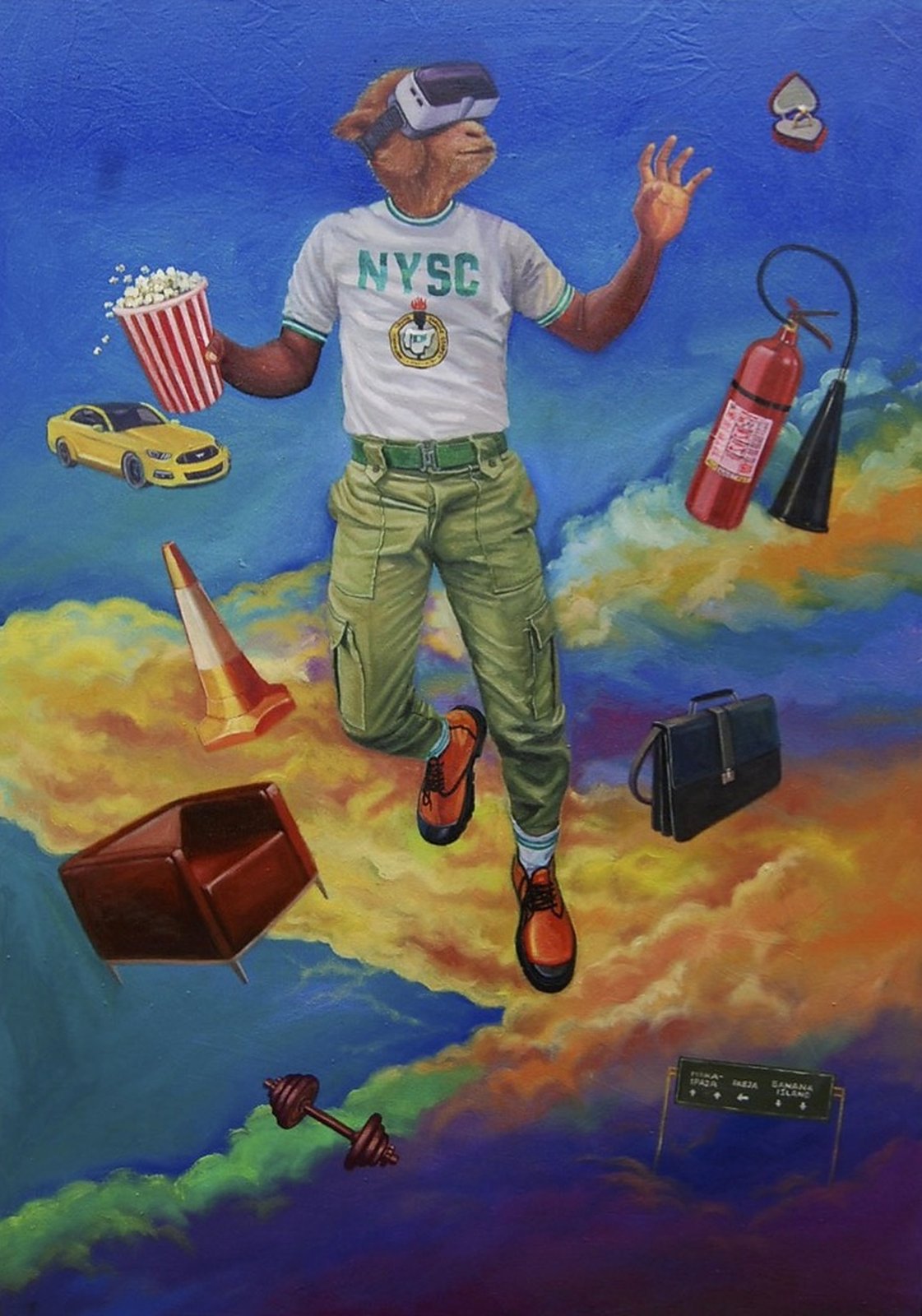
Winner, Afriuture Art competition. Used with the artist’s permission.
A painting is not flat, and a photograph keeps only its image.
Ridges of oil paint, canvas weave and the history of every knock the panel has taken.
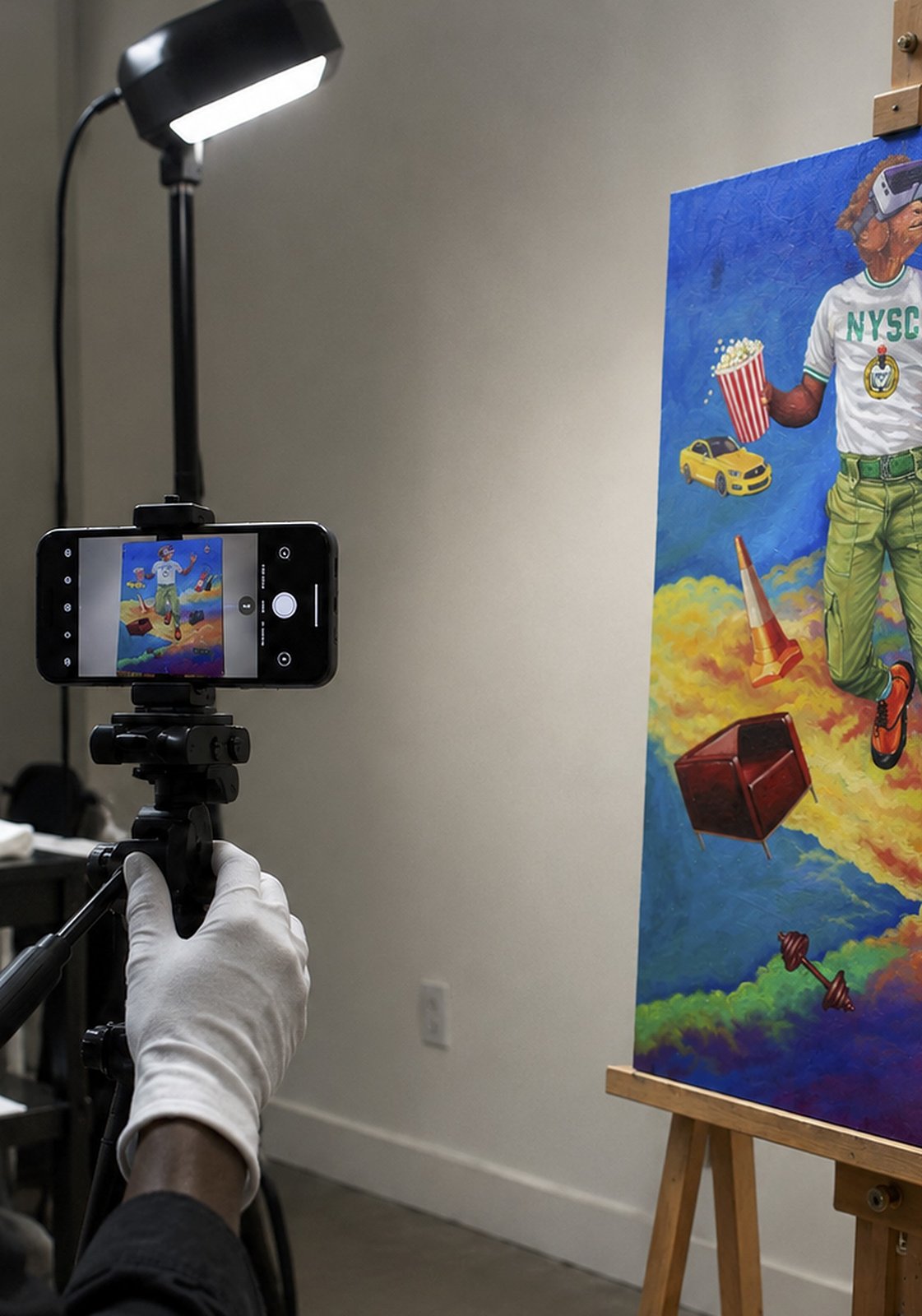
Twelve exposures, one lamp, no laboratory. A phone, a polarising filter and six lamp positions.
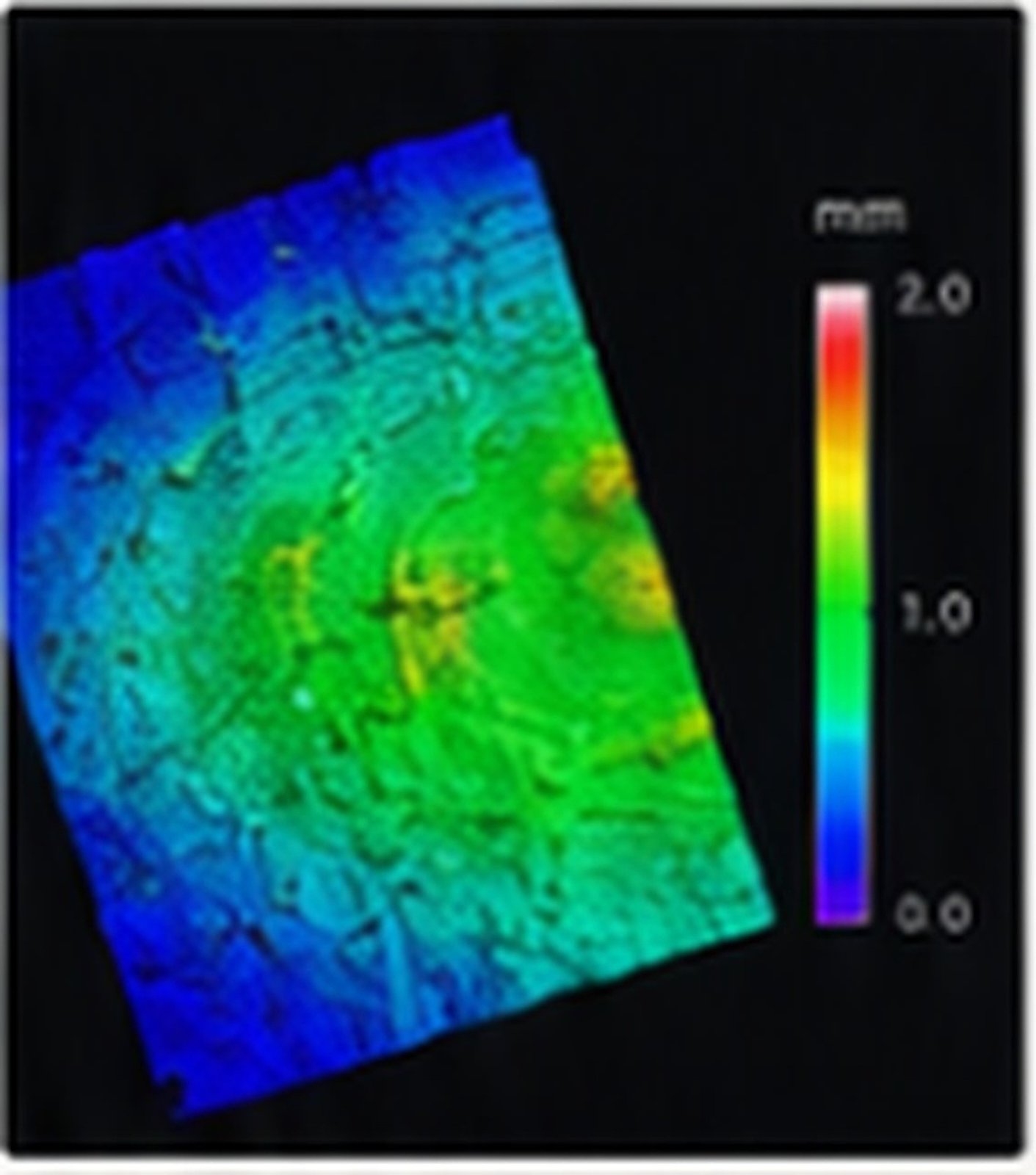
Numbers stored separately from claims, with the capture conditions attached.
About · ARcv, pronounced “archive”
In 2017, Adaramati Shogo started Ramati Art Africa in Lagos: Africa’s first online gallery. Virtual exhibitions carried African artists to a world that had rarely seen them. Our Afriuture Art competition put a $2,500 grant behind the next generation, and in 2018 it crowned Julius Agbaje for Virtual Reality, with Chief Nike Okundaye, Oliver Enwonwu and Abiodun Olaku on the judging panel.
Through those years we were privileged to work with masters and rising names alike, among them Oliver Enwonwu, Chief Nike Okundaye, Abiodun Olaku, Julius Agbaje, Nissi Ogulu and Ken Nwadiogbu.
From the day we opened in 2017, our galleries were virtual, with no walls to limit who could walk in. The rooms we reached were real. We hosted and exhibited for world leaders, diplomats and business leaders at international conferences of the Commonwealth Africa Initiative, placing African art in front of the people who shape the continent’s future.
We have evolved beyond showcasing art. The greater value lies in documenting it: the most undocumented body of art in the world, and arguably the most valuable.
What a work was like on the day it was made. Who made it. Where it has been since. Africa holds one of the largest bodies of art that no one has properly documented, and every year work changes hands, travels, ages and is restored, while what we know of it fits in a few photographs and somebody’s memory.
So we are returning with a new purpose. ARcv is a way of keeping that record. One person, a phone and a single lamp moved by hand can capture a work’s surface as it is today. Measure it when it is made, measure it again when it moves, and the difference between the two is the record. It does not replace the conservator, the registrar or the collector’s eye. It gives them firmer ground to stand on. Our testing so far is mostly one painting, captured over and over; the numbers mostly hold, and what they mean stays a human judgement.
A continent’s art cannot be documented by one studio. With you, with the artists, galleries, conservators, handlers, collectors and institutions who know these works best, it can be. Join the journey and help us build the product.
Adaramati Shogo · Founder, Ramati Art Group
Help us build the product
We are building ARcv with the people who live with these questions every day. Your answers decide what we make first.
We are asking artists, conservators, registrars, handlers, insurers, galleries, estates, collectors and scholars. About eight minutes, no right or wrong answers, and we will send you a summary of what we learn.
A private correspondence. One click to stop, at any point.
We use your answers to shape ARcv, and we will not sell them. Ask us to delete them any time at hello@arcv.art.
Noted.Your address has been noted.
Thank you. We’ll be in touch.